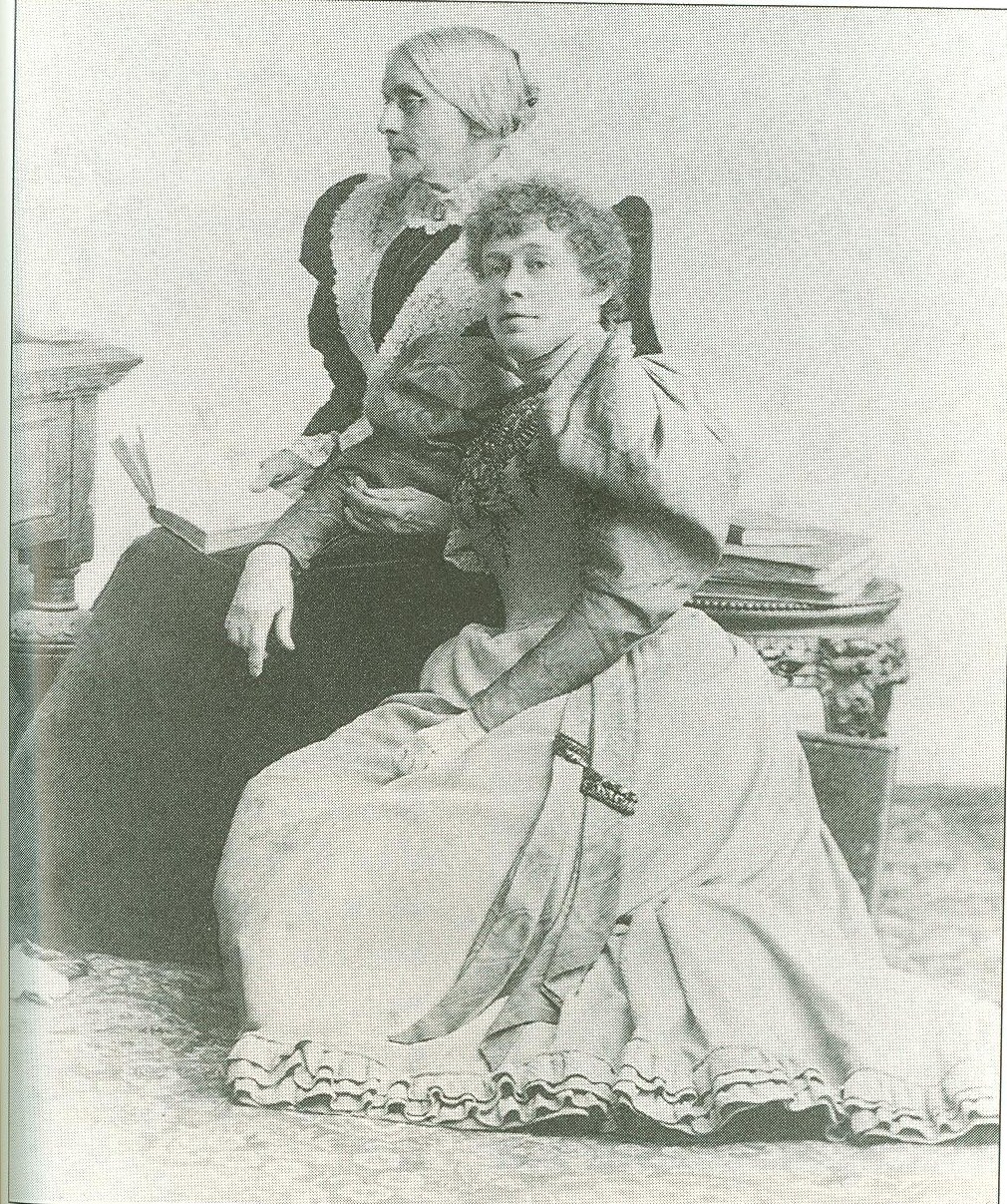
 Emily Brown Gross (June 13, 1849 – April 12, 1932) was a prominent Chicago socialite, arts patron, philanthropist, and advocate for women’s suffrage.
Partner Susan B. Anthony
Queer Places:
1204 N Lake Shore Dr, Chicago, IL 60610, USA
Graceland Cemetery, 4001 N. Clark Street, Chicago, Illinois 60613 United States
Emily Brown Gross (June 13, 1849 – April 12, 1932) was a prominent Chicago socialite, arts patron, philanthropist, and advocate for women’s suffrage.
Born in Cornwall, England, she immigrated to the United States and settled in Illinois.
In 1874, she married Samuel Eberly Gross (1843–1913), a wealthy Chicago real estate mogul who made a fortune developing residential land. The couple resided in a palatial mansion at the corner of Lake Shore Drive and Division Street in Chicago. It served as the hub for her socialite activities, civic receptions, and gatherings with prominent artists and suffragists during the late 19th century.
Following years of high-profile involvement in Chicago society, Emily and Samuel Gross divorced in 1900.
During the late 19th and early 20th centuries, Gross was an active figure in Chicago’s social reform, artistic, and suffragist circles:
She served as treasurer and on the executive board of the Central Art Association and its publication, Arts for America.
She was actively involved in Chicago’s progressive networks, frequently associating with members of the Hull House community and local civic organizations.
Gross was an ardent advocate for women's rights and provided significant financial and organizational support to national and local suffrage causes.
Gross is recognized in queer women's history primarily through her close relationship with suffrage leader Susan B. Anthony, as well as her connections to prominent 19th-century lesbian artists and reform circles.
Historian Lillian Faderman highlighted the romantic friendship between Susan B. Anthony and Emily Brown Gross.
While direct correspondence between the two women has not survived, Anthony’s letters to close associates detail significant periods spent traveling and staying together in California during the late spring and summer months.
In To Believe in Women: What Lesbians Have Done For America, Faderman positions their bond within the broader historical tradition of same-sex "Boston marriages" and romantic friendships that sustained prominent women leaders of the era.
Underscoring their recognized intimacy, American sculptor Bessie Potter Vonnoh modeled a dual-portrait statuette in 1896 titled Mrs. S.E. Gross and Susan B. Anthony. While the original clay model was destroyed during the casting process and the location of the plaster version remains unknown, the sculpture serves as a physical record of their documented partnership in civic life.
Gross regularly opened her Lake Shore Drive home to women artists and reformers:
She frequently entertained Harriet Hosmer, the celebrated 19th-century American sculptor who lived openly in Rome in a circle of independent expatriate women.
Through her patronship of Bessie Potter Vonnoh and her work with the Central Art Association, Gross formed a vital bridge between wealthy female benefactors and self-sustaining women artists of the Gilded Age.
References:
 To Believe In Women: What Lesbians Have Done For America - A History – A Compelling Landmark Account of 19th and 20th Century Rights by Lillian Faderman |
Other references:
Support this project
This website is a passion project researched, developed, and funded entirely by me. If you find the content valuable and would like to help support the ongoing research and hosting costs, any contribution is deeply appreciated.
Thank you for keeping this independent resource alive!
My books on Amazon: Elisa Rolle's books